How to handle late cancellations fairly
A cancellation an hour before is a slot nobody can fill and a gap in your week you cannot recover. A policy is not aggression — it is the thing that lets you say yes to the client without resenting them. How to write one, and how to apply it.
By Tony Dalton · Updated
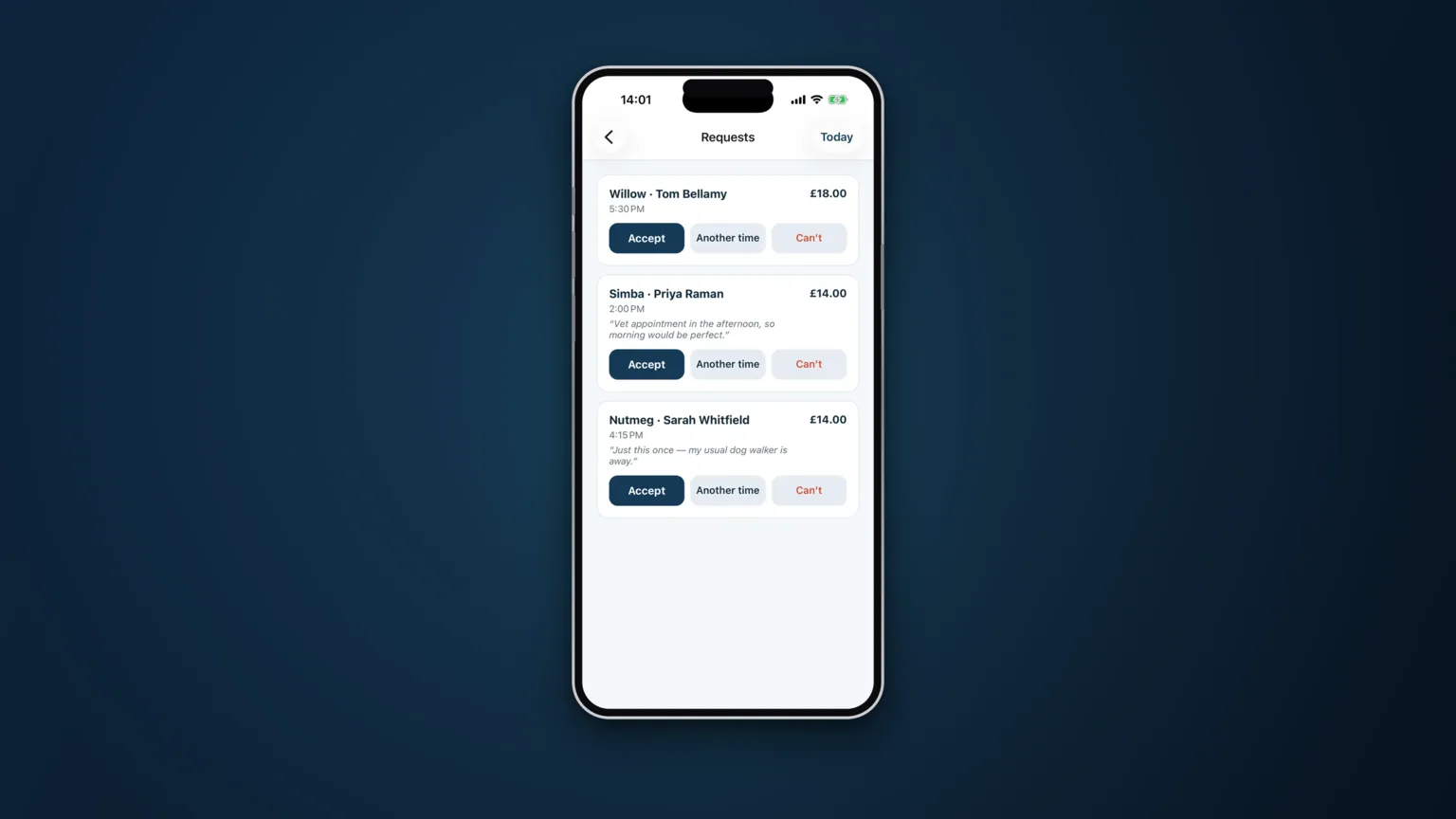
Every walker has had the Sunday-night message: "so sorry, we're not going to need Monday after all!" Once, that is fine. As a pattern, across a full round, it is the difference between a viable business and one where a third of the diary is theoretical.
The reason most walkers do not charge for it is not softness. It is that there was never a policy, so charging now feels like a punishment invented after the fact — which is exactly what it looks like from the other side.
Agree it before there is anything to argue about
A cancellation policy works when it was part of signing up. It fails when it is introduced in response to a bad month. Put it in your terms, mention it out loud at the meet and greet, and let the client agree to it when nothing is at stake. From then on it is not your judgement of their behaviour — it is a rule you both already accepted.
What a policy needs to say
- The notice period. A clear cut-off — the day before, or 24 hours, or by a stated time. Vague notice periods produce arguments about when the message was sent.
- The fee. Full price, half, or a fixed amount. Say which.
- How to cancel. One channel that you actually monitor. "I told your colleague at the door" is how disputes start.
- Recurring bookings. Whether a skipped week in a standing slot counts as a cancellation. It should, or the standing slot means nothing.
- Holidays. Longer notice for extended breaks, if you need it — a fortnight of a regular client is a large hole.
- What you will not charge for. Say this explicitly. It is the part that makes the rest read as fair.
Build in the exceptions on purpose
The reason to write down what you will not charge for is that you will waive fees anyway — for a bereavement, a hospital admission, a genuinely ill dog. Deciding in advance which categories are waived means you are applying a policy rather than judging each client's story, and it means the discretion is not being handed out based on who argues hardest.
A short version works: "we don't charge cancellation fees where the animal is unwell or there's a family emergency — just tell us."
Apply it consistently, and quietly
Inconsistency is what actually damages the relationship. If one client is charged and another is not for the same thing, and they talk to each other — and in a village they do — the policy is now a favouritism problem.
The tone that works is administrative rather than emotional. The fee appears on the invoice as a line, described plainly, alongside the walks. No paragraph, no explanation, no apology. It is a service you charged for, the same as any other.
Weather is your cancellation, not theirs
Worth separating: when you cancel — ice, a heat warning, an unsafe day — that is not a client cancellation and should never be charged. Tell everyone early, in one go, and say what you are doing instead if anything. There is more on this in cancelling a round in bad weather.
How CorePaw Pro handles it
Your notice period and your fee are settings, not a habit. A booking cancelled inside the notice period records the fee against that booking, and it carries onto the client's invoice as billable work alongside the walks — so applying the policy costs you nothing and forgetting it is no longer the default. Cancellations from either side notify the other, so there is a record of who cancelled and when.
Related articles
Run the round, reassure the owner, get paid.
CorePaw Pro puts your schedule, clients, pet-care notes, GPS walks, owner reports and invoicing in one field-ready app — and keeps working when the signal disappears.
Full access for 30 days · No card · Unlimited clients and pets