How to tell clients about a price rise
The message most pet-care businesses dread, usually because it has been left four years too long. Notice, timing, wording, and why the apology is the part that causes the problem.
By Tony Dalton · Updated
Nobody enjoys this one. The fear is losing clients you like to a conversation about a couple of pounds — so the increase gets postponed, and postponed, and by the time it is unavoidable it has to be big, which makes it genuinely harder.
Most of the difficulty in a price rise is created by leaving it too long. Almost all of the rest is created by how it is written.
Give real notice
A month is the minimum. Six weeks is comfortable. It gives clients time to absorb it, ask, and rearrange if they need to — and it makes clear that this is a scheduled business decision rather than a reaction to something.
Say when the new price starts, and say it as a date, not as "from next month".
Tell everyone at once
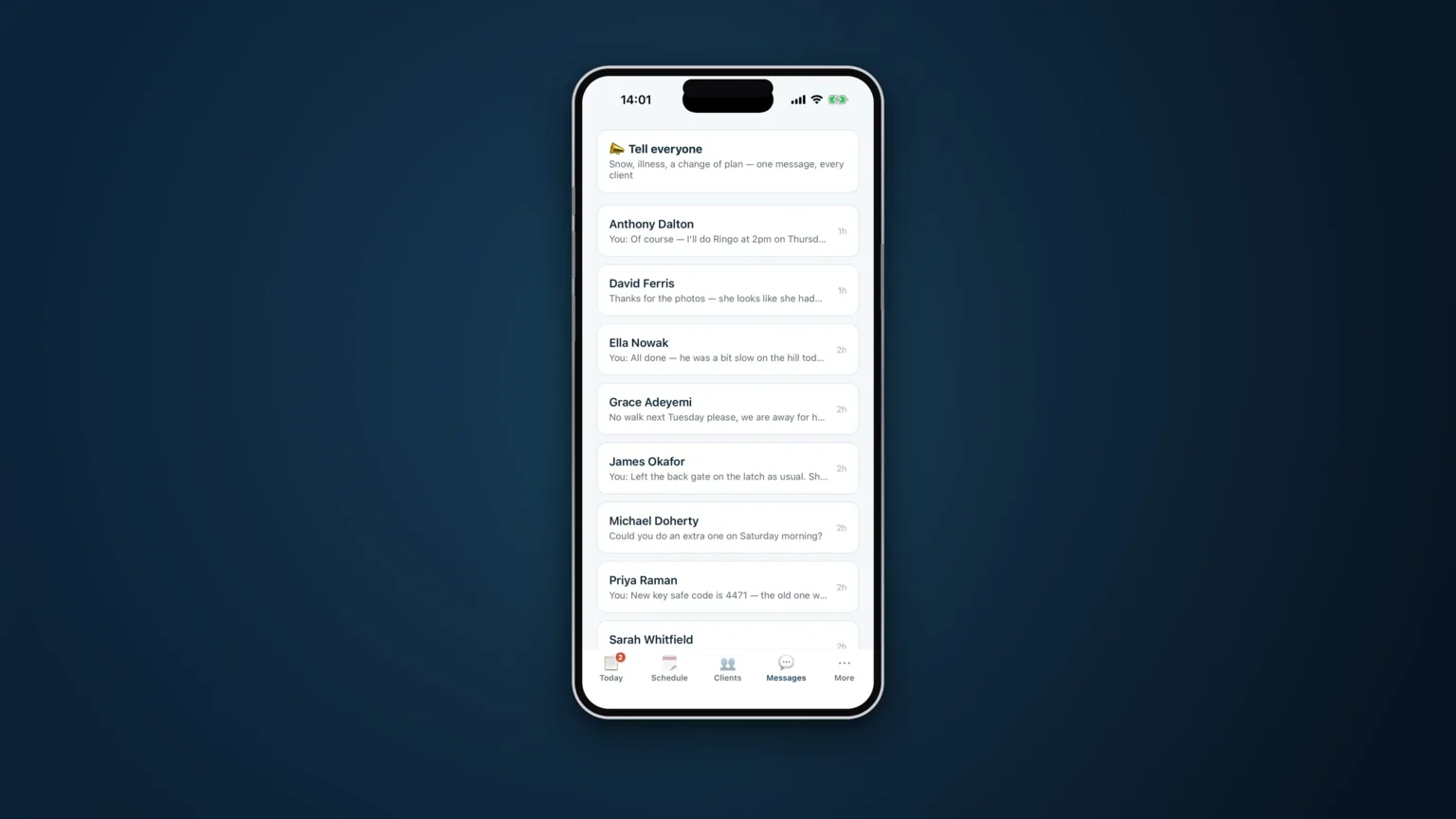
Individual messages sent as you get round to them create two problems: the clients who hear last feel they were handled differently, and you will forget somebody, who will then be surprised by an invoice. One announcement, to every affected client, on the same day. Then answer the replies individually, which is where the actual conversation happens.
Do not apologise, and do not over-explain
The instinct is to soften it with a paragraph about fuel and insurance. The effect is the opposite of what is intended: a long justification invites negotiation, because it frames the price as something being argued for rather than something being stated.
One line of reason is plenty — costs have risen, this is the annual review — and then the facts. Confident and brief reads as professional. Apologetic and lengthy reads as uncertain, and uncertainty is what produces the "any chance you could keep us on the old rate?" reply.
A structure that works
- What is changing, in numbers. Their service, old price, new price.
- When it starts. A date.
- One sentence of reason.
- What is not changing — the same days, the same walker, the same round.
- An invitation to ask, and a genuine reply if they do.
Keep it to something that can be read on a phone at a bus stop.
The clients who leave
Some will. Usually fewer than feared, and usually the ones for whom price was the whole relationship. It is worth being clear-eyed that a round full of clients who will only stay at a rate you cannot live on is not a round worth protecting.
If someone does leave, leave well: no argument, no discount to win them back — because that discount will be known about — and an honest "you're welcome back if anything changes". Some of them come back.
Then make it a schedule
The reason this message is frightening is that it happens once every four years. Move to an annual review, in a fixed month, and it stops being an event. Clients who know you review every January are not surprised in January.
In CorePaw Pro a broadcast announcement goes to every client at once, and replies come back privately into each client's own thread — so one message becomes the individual conversations it should, rather than a group chat. Prices themselves live on your service list, so changing one changes what future bookings are priced at without rewriting your invoice history.
Related articles
Run the round, reassure the owner, get paid.
CorePaw Pro puts your schedule, clients, pet-care notes, GPS walks, owner reports and invoicing in one field-ready app — and keeps working when the signal disappears.
Full access for 30 days · No card · Unlimited clients and pets