What a cat-sitting drop-in visit should cover
Cat visits are the most under-specified job in pet care. Thirty minutes, someone else’s kitchen, an animal that may not appear at all. A working checklist, and why software built for dogs gets cats wrong.
By Tony Dalton · Updated
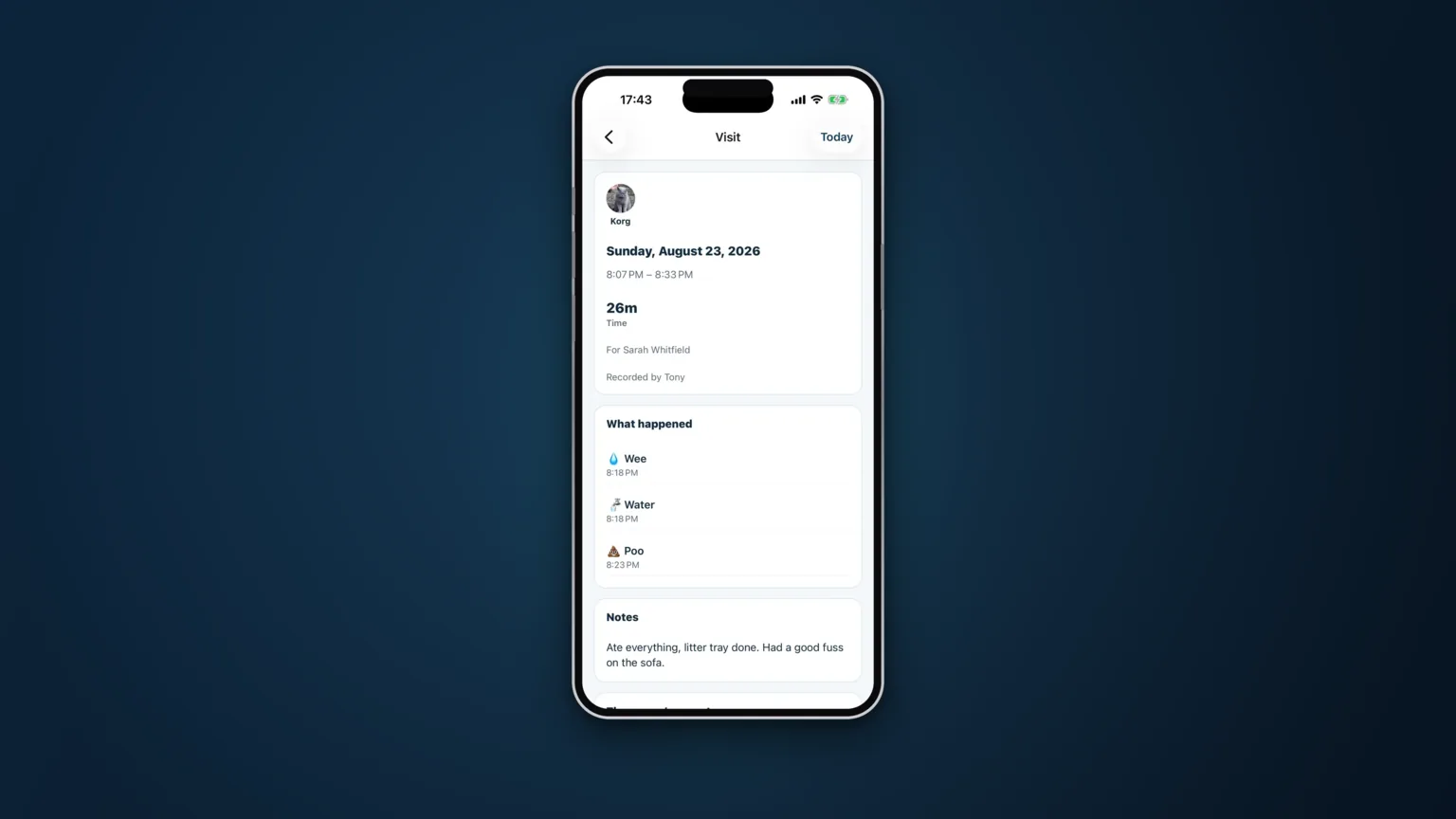
Cat sitting looks like the simple end of pet care and is not. There is no walk to structure the visit, the animal may never show itself, and half the job is looking after a house. It also carries a specific risk that dog work does not: because so little visibly happens, it is easy for a visit to become shorter and shorter until it is a bowl-filling exercise.
A written standard for what a visit covers protects the cat, the client and you.
A working checklist
Food and water
- Fresh water, bowl washed, not topped up on top of yesterday's.
- The correct portion, from the correct food, in the place the cat expects it.
- Note what was eaten since the last visit. This is the single most useful thing you record. An untouched bowl on day two of a sit is the beginning of a phone call.
Litter
- Trays cleaned every visit, not every other.
- Note what was in them — or that they were empty, which for an indoor cat is information.
The cat
- Seen or not seen. Say which, honestly.
- Where they were, and whether that is their normal.
- Behaviour: hiding, vocal, affectionate, off somewhere new.
- Anything visible you would want a vet to know about — but described, not diagnosed.
- Time spent with them. For a sociable cat this is the actual service.
Medication
- Given or not given, with the time.
- If not given, why — and tell the owner today, not at the end.
The house
- Post moved, curtains and lights as agreed, heating as agreed.
- Windows and doors secured on the way out.
- Anything odd: a leak, a smell, a light left on that you did not leave.
The cat you never see
Plenty of cats hide for the whole sit. This is normal and is not a failed visit — but it requires you to switch to indirect evidence and to be explicit about it. Food gone, tray used, bed warm, a toy moved. Write down what you can verify, and say clearly that the cat itself was not seen.
Agree a rule with the owner at the start for how long that can go on. Two visits with no sign of the cat and no food eaten is a different situation from a shy cat under a bed, and you want the threshold agreed before you are the one deciding.
Why dog software gets cats wrong
Most pet-care apps are dog-walking apps with a "visit" bolted on. It shows in small ways that irritate daily: a route map on a job with no route, a distance field, an "off lead" toggle on a cat's profile, prompts about recall.
The details matter because they shape what you are asked to record. A cat's record should ask cat questions — indoor or outdoor, where they hide, whether they are allowed out, what their normal appetite looks like — and should never offer a button to let one off the lead.
In CorePaw Pro a drop-in is a first-class job type with no route at all, and pet records are species-aware. Feeding and care instructions — portions, where the food is kept, the routine the animal expects — sit on the card you read at the door.
Related articles
Run the round, reassure the owner, get paid.
CorePaw Pro puts your schedule, clients, pet-care notes, GPS walks, owner reports and invoicing in one field-ready app — and keeps working when the signal disappears.
Full access for 30 days · No card · Unlimited clients and pets