What owners actually need from a post-visit update
A drop-in visit has no route map and no walk to describe. That makes the update harder, not easier — and it is the whole of what the client experiences while they are three hundred miles away.
By Tony Dalton · Updated
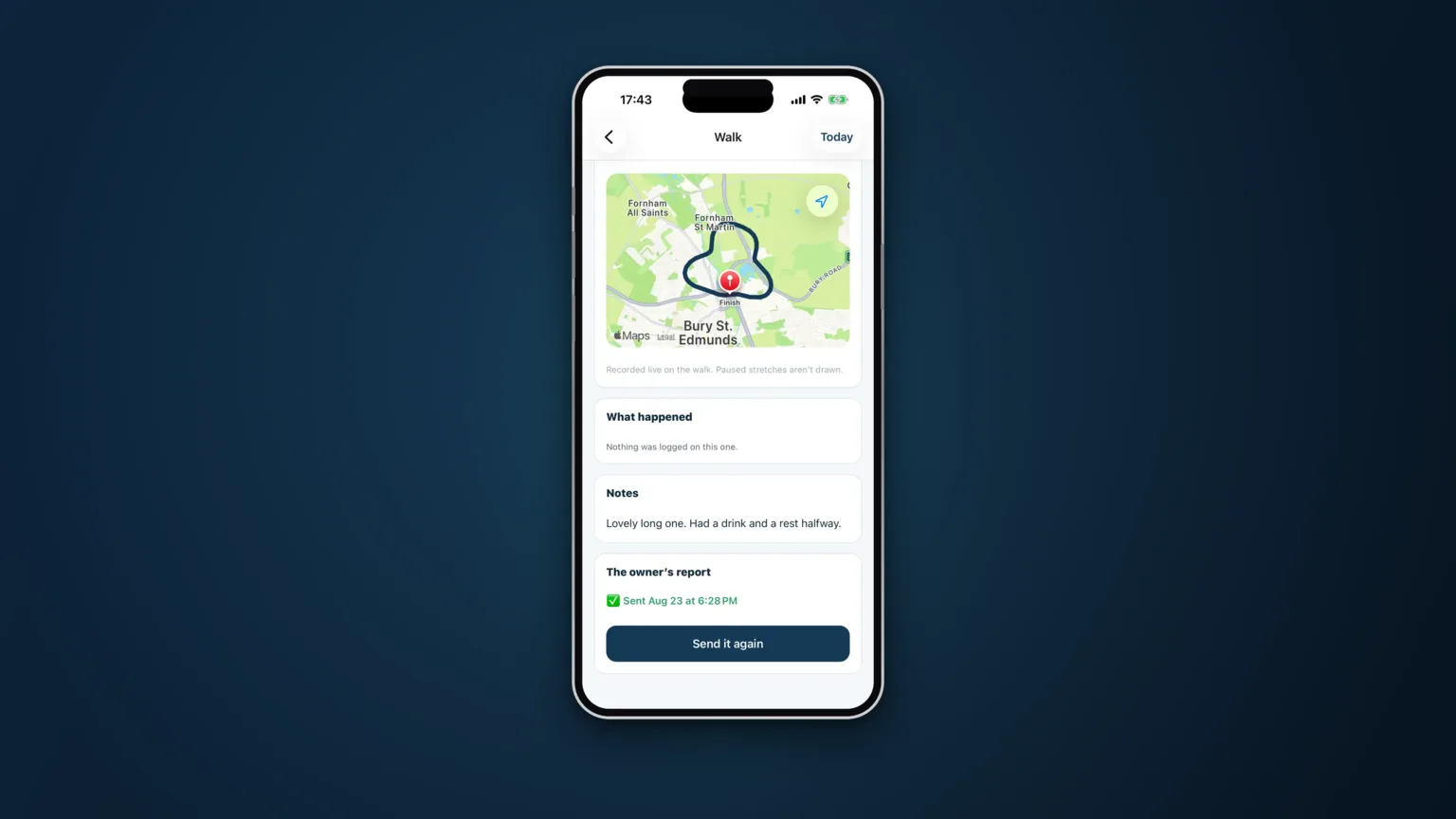
A dog walk produces a natural story: we went here, for this long, and here is a photo of it. A drop-in visit produces almost nothing to look at. You let yourself in, you fed a cat, you cleaned a tray, you sat for ten minutes, you left. Written badly, that is "visited, all fine".
But the client is away. This message is the only contact they have with their home and their animal today, and they will read it more carefully than any walk report a dog walker ever sent.
Answer the three questions they are actually asking
Is the animal all right?
Not "fine" — what you saw. Did the cat come out? Did she eat? Did she use the tray? Was she where she usually is, doing what she usually does? For a nervous cat who hides, "she stayed under the bed but the food went and the tray had been used" is enormously more reassuring than "all good", because it tells the owner that you know their cat's normal.
Is the house all right?
The unspoken half of pet sitting. Post picked up, no leaks, heating on, everything locked. Say it in one line. Owners will not ask, and they will notice that you said it.
Did you actually come?
Nobody says this out loud, and everybody wonders it. A timestamped visit and a photo taken on the day settle it permanently, and settle it without either party having to be awkward about it.
Record what makes a pattern
Over a two-week sit, the individual visit matters less than the sequence. Eating, drinking, toileting, medication given, mood — logged each visit — turn into something an owner or a vet can read. If a cat stopped eating on day four, that fact is worth far more than any adjective, and it only exists if somebody was recording the ordinary days too.
Photographs, carefully
Photos of the animal: yes, one per visit, and it does more work than a paragraph. Photos of the house: only what is needed to show something — the fed bowl, the closed window. You are inside someone's home, and the pictures you take there deserve the same care as anything else you were trusted with.
Say when something did not happen
The hardest updates to write are the ones where you did not achieve the thing. The cat did not appear. The dog would not take the tablet. The bowl was untouched.
Send those anyway, plainly, on the day. An owner who hears on Tuesday that their cat did not come out has a chance to say "she does that when the boiler is on, try the airing cupboard". An owner who finds out at the end of the week has lost a week.
The same rule that governs walk reports governs these: describe what was observed and recorded, and report absences as absences. Nobody examined the animal, so nobody should be writing anything that sounds like a clinical opinion.
Send it before they have to ask
Timing is most of the perceived quality. An update that lands as you leave the house is worth several that arrive together in the evening. It also means the record is written while you are still standing in the room, which is when it is accurate.
In CorePaw Pro a drop-in visit is a job with no route: you log feeding, water, toileting, medication, behaviour and photos as you go, tap "home safe" when you leave, and the owner's update is built from what you recorded — with delivery status recorded on the visit, so you can see whether it actually reached them.
Related articles
Run the round, reassure the owner, get paid.
CorePaw Pro puts your schedule, clients, pet-care notes, GPS walks, owner reports and invoicing in one field-ready app — and keeps working when the signal disappears.
Full access for 30 days · No card · Unlimited clients and pets