How to take a holiday as a dog walker
Self-employed pet care makes time off feel impossible: no cover, no income, and a round that might not be there when you get back. It is a planning problem, and it starts about three months earlier than most people start it.
By Tony Dalton · Updated
A striking number of professional dog walkers have not had a full week off in years. Not because they do not want one — because the round does not obviously survive it. There is no cover, the income stops, and there is a real fear that clients who find someone else for a fortnight will simply stay with them.
All three of those are solvable, but not in the week before you go.
Announce it early, and in writing
Give clients as much notice as you would want from them — two months for a week, longer for anything bigger. Early notice turns your holiday into a thing they plan around rather than a problem you drop on them.
Say specifically: which dates, whether there is cover, who that cover is, and what happens to standing bookings. Ambiguity here is what generates a fortnight of individual messages.
Decide honestly whether you want cover
There are two respectable answers.
No cover. Simpler, cheaper, and you lose the income. It works if you have given enough notice for clients to make other arrangements, and if you are comfortable with the risk that one or two like the substitute. Many long-standing walkers do exactly this and are fine.
Cover. Keeps the round running and the income partly intact, and takes real preparation. Whoever covers needs the access instructions, the behaviour notes, the vet details and the emergency contacts — which is only possible if those things are written down rather than in your head.
The second option is where good record-keeping stops being tidiness and starts being money.
Prepare cover properly
If someone is covering, they need, per dog: how to get in, how to handle this animal, whether it goes off lead and where it must not, what it is like with other dogs, the vet, the emergency contact, and what to do if something goes wrong. They also need to know what they may decide alone and what they must ring about.
Introduce them before you go. A handover walk with you present is worth any amount of written notes, for the dog as much as for the person.
And be careful about scope: a cover walker needs the clients they are covering, not your whole book. That is a permission decision, not a trust decision.
Plan for the income, not just the days
The financial half is the one that quietly stops people going. If you have priced your work on 52 working weeks, every week off is an unfunded pay cut — which is why holiday should be part of how you set your rates in the first place. There is more on that in setting your prices without guessing.
Practically: invoice before you go rather than after. Money in the account is what makes a fortnight relaxing.
Close the diary properly
The most common holiday failure is the booking request that arrives while you are away and sits unanswered, or worse, gets accepted by a calendar that does not know you are gone. Mark the days as not working, with a reason clients can read, so requests for those dates are refused rather than left waiting for you to decline them on a beach.
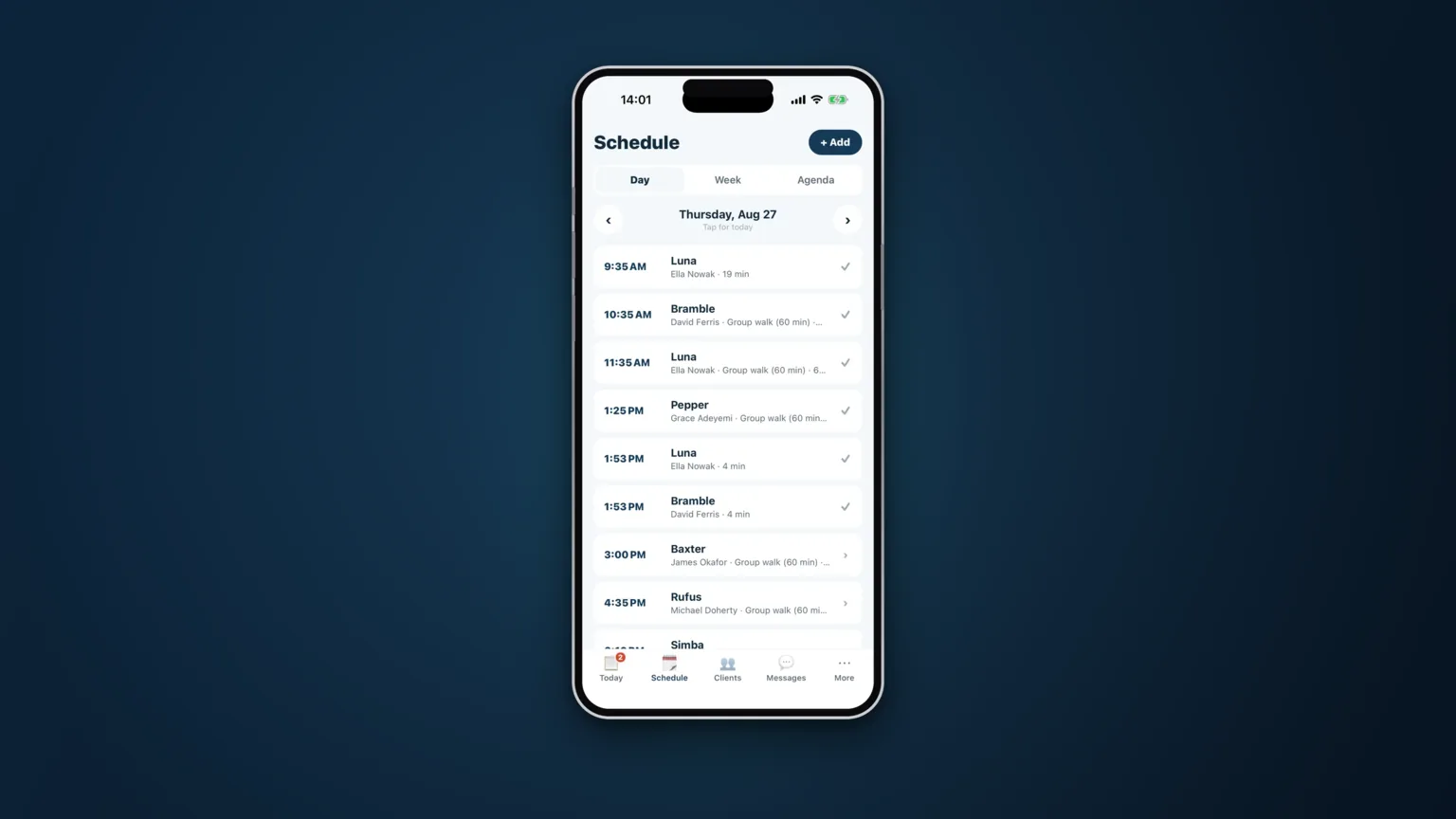
In CorePaw Pro days off and holidays are entered with a reason your clients can read, and requests for those days are refused rather than left for you to handle. Cover walkers can be added with limited access and assigned only the bookings they are covering, with per-pet visibility keeping the rest of your book out of view.
Related articles
Run the round, reassure the owner, get paid.
CorePaw Pro puts your schedule, clients, pet-care notes, GPS walks, owner reports and invoicing in one field-ready app — and keeps working when the signal disappears.
Full access for 30 days · No card · Unlimited clients and pets